
REAL ESTATE CAREER IN SINGAPORE
COMPLETE 2026 GUIDE
INTRODUCTION
When I left my Computer Science career in 2007 to help my wife run her fledgling Kumon centre, I thought I had made my big career change. For two years, I worked alongside her, learned the ropes of running a small business, and got comfortable with the uncertainty that comes with entrepreneurship.
But at the end of 2009, I found myself at another crossroads. That’s when I decided to enter the real estate industry in Singapore. You can read the full story of my career transition here.
Today, I am a CEA-registered property agent (CEA Registration Number R012421H) with PropNex Singapore (CEA Licence Number L3008022J), and I have been in this business for more than a decade. Over the years, I have helped buyers, sellers, landlords, tenants and investors, from first-timers to senior executives to business owners.
Along the way, I also built a blog and educational content because I wanted to be the kind of real estate agent I wished I had met when I first started dealing with property.
If you’re reading this, there is a good chance you’re at some kind of crossroads. Maybe you’ve just lost your job. Maybe you’re bored or unfulfilled in your current role. Or maybe you’re simply curious about sales and whether becoming a property agent in Singapore could be a real option for you. The common thread is the same feeling I had back then, a mixture of hope and fear.
The fear is understandable. But is this path actually right for you?
What follows is everything I wish I’d known before making the leap. I’ll cover the licensing process, the real costs and income expectations, what to expect in your first 90 days, and the realities of building a commission-based business.
My goal is simple: by the end of this guide, you’ll know whether a property agent career in Singapore is right for you. And the first step you can take. Cool?
P.S. CEA stands for Council for Estate Agents. This is a government body that regulates property agents and agencies in Singapore.
KEY TAKEAWAYS
- The licensing path is standardized: A real estate career in Singapore follows a clear three-part path—meeting CEA eligibility rules, passing the RES course and RES exam, and finally registering with a licensed real estate agency (also known as the estate agent). The whole process typically takes four to six months if everything goes smoothly.
- The first year is financially challenging: The rewards in this line can be very attractive, but the first year is usually financially tough. Income is irregular, start-up costs appear quickly and it takes time to learn and master the relevant skillsets. Many new property agents struggle to earn more than a modest amount in their first twelve months. Careful savings, realistic expectations, the right attitude, and choosing the right agency and mentor make a big difference to whether you survive this phase.
- Being a property agent means more than showings: It requires marketing skills, market knowledge, people skills, client relationship management, financial discipline, and resilience during slow months. This guide covers what most training courses don’t. The real costs, the emotional challenges, what separates agents who thrive from those who quit, and how to set yourself up for long-term success.
WHAT EXACTLY DOES A PROPERTY AGENT DO IN SINGAPORE?
Before you sign up for a RES course, it helps to be clear about what the role actually involves. Under CEA rules, the official term is Real Estate Salesperson.
In everyday speech, people simply say “property agent” or “real estate agent“. Or simply, “agent“. Whatever the label, it describes a licensed individual who advises clients on buying, selling or renting property and who is registered under a licensed estate agency.
The biggest mental shift for most new agents is this: a property agent is not an employee drawing a salary. A property agent runs a small business under the umbrella of a larger agency, such as PropNex Singapore. The agency provides the legal framework and brand, but each agent is responsible for bringing in business, managing time, and paying for marketing and other operating costs.
If you choose to take it easy or do nothing, no one in the agency will go after you. This is the total opposite of what happens in the corporate world.
Day to day, the work covers a lot more than just opening doors for viewings. A big part of the role sits in:
- Marketing – creating listings, arranging photographs and videos, and using property portals and social media to reach the right audience.
- Advisory work – understanding client needs, reading market data, doing price comparisons, and recommending suitable options.
- Transaction management – negotiating terms, preparing paperwork, and managing timelines from option to completion.
- Prospecting – generating new leads through referrals, networking, direct outreach, content creation, and consistent follow-up with warm and cold contacts.
- Learning – attending Continuing Professional Development (CPD) courses, trainings and workshops to upgrade yourself, project briefings and conducting site visits.
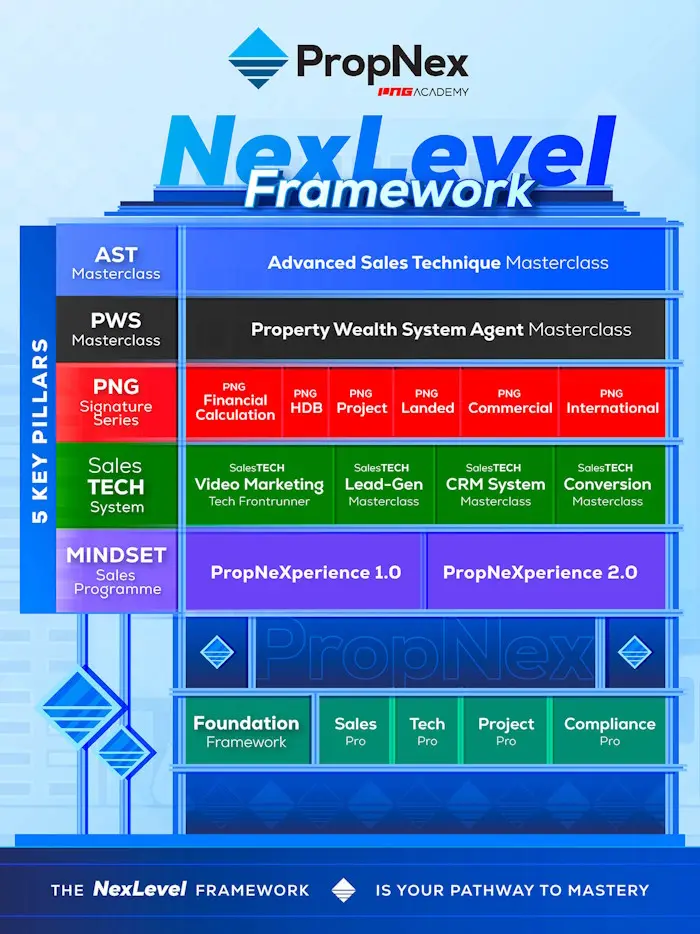
A typical day for a busy agent might look like this:
- Morning: follow-ups and admin such as replying to enquiries, updating listings and planning the day.
- Afternoon: contacting new prospects, property research, or pricing discussions with sellers and landlords.
- Evening and weekend: viewings and meeting clients who can only meet after office hours.
Because earnings come entirely from commissions, everything flows back to one key activity: consistent prospecting and relationship building.
A real estate career in Singapore is sustainable only when there is a growing database of clients, referrals, and repeat business.
WHY CONSIDER A REAL ESTATE CAREER IN SINGAPORE IN 2026?
Property is often called Singapore’s ‘national sport’—and it’s not just a figure of speech. A HSBC survey showed Singaporeans spend hours each week browsing property portals even when they’re not actively buying or selling, sometimes more time than they spend with their own children.
Some say we’re more obsessed with property than food, supposedly our other national obsession. That constant interest creates real opportunity.
When everyone is already thinking about property, there will always be demand for agents who can turn that curiosity into informed decisions.
In recent years, the property market here has remained relatively steady, despite global uncertainty and various rounds of cooling measures. The government keeps a close eye on prices, but transactions continue as families upgrade, downsize, invest, and restructure their portfolios.
Some of the main attractions of this career are:
- Income potential with no formal ceiling
There is no fixed salary scale telling an agent what can or cannot be earned. For top performers, six-figure monthly commissions are possible, especially in high-end segments or new launch projects.
These cases are not uncommon and usually occur after years of building a name and a strong client base. Still, the fact that income is not capped is a powerful pull for many people who feel stuck in typical pay bands. - Time flexibility
Property agents usually do not need to report to an office at a fixed time, and much of the work can be done from home or on the move. That means someone can attend a child’s school event on a weekday morning, walk the dog in the afternoon and then conduct house viewings in the evening.
The trade-off is that the busiest times are often in the evenings, on weekends, and on public holidays, when clients are free. For some, this rhythm suits family life. For others, it feels stressful, so it is important to be honest about personal preferences. - Lower barrier to entry compared with many professions
There is no need for a university degree. The RES course, RES exam, licensing fees, and basic start-up costs are not cheap, but they are still far lower than what is needed to train as a lawyer, doctor or accountant.
That makes a real estate career in Singapore a realistic option for someone with O-levels, a diploma, or even for those who did not do well in school but are willing to study now. - Varied career progression and networking opportunities
Successful agents can build teams, specialise in niche markets, become trainers, or transition into consultancy and development roles. The industry also creates unexpected business connections—from corporate relocations to international business forums.
I’ve had opportunities to engage with visiting delegations and industry leaders, which has broadened my perspective and opened doors beyond traditional property transactions. - Impactful and meaningful work
A real estate career in Singapore isn’t just about commissions. Your advice and work can genuinely change someone’s life trajectory. Such as helping a young couple buy their first property, guiding someone through a divorce sale or sensitive estate sale, or protecting a retiree from a bad investment decision.
These are the moments clients remember years later, and for many agents (myself included), that sense of purpose is what makes the long hours worthwhile.
All this sounds attractive, but there is another side that people need to hear. Many first-year agents struggle to close deals during their 1st year.
With no basic pay, bills still arrive every month even when no deals are closing. Competition is real, with more than thirty thousand property agents registered with CEA. Emotionally, it can be tiring to handle rejections, slow markets and demanding clients.
So who tends to do well in this line?
From what I have seen, it is seldom the loudest salesperson. It is usually someone who can stay disciplined without a boss watching, enjoys talking to people, is willing to keep learning, and has enough financial buffer to survive the slow start.
For me, the move into real estate is worth it because I enjoy helping people make big decisions with clear data, and I like having control over my time. The trade-offs are real, but so are the rewards.

WHAT I MISS MOST ABOUT LEAVING THE CORPORATE WORLD?
I don’t regret leaving IT industry, but I’d be lying if I said there weren’t trade-offs. Some things about corporate life only become obvious once they’re gone.
The Social Aspects
One of the biggest adjustments was losing the built-in social structure of an office. When you work in a company, friendships form naturally. You grab lunch with the same colleagues, joke around during coffee breaks, and sometimes meet up after work. There’s a rhythm to it that doesn’t require much effort.
As a property agent, your “colleagues” are other agents in your agency, but everyone is focused on their own business. You might chat at the office or during training sessions, but there’s no shared project binding you together. Most days, you’re working alone—following up with clients, doing viewings, or chasing leads from home or a café.
I still meet friends for lunch, but it’s scheduled now, not spontaneous. The casual daily interaction that comes with a shared workspace? That’s something I genuinely miss.
Predictable Schedules
In corporate life, even during busy periods, there was structure. I knew my working hours. I could plan my evenings and weekends. If you needed to take leave, you applied for it, and it was approved (or not), but at least there was a system.
Things don’t work this way once you become a property agent. Clients meet when they’re free, which usually means evenings and weekends. If a buyer wants to view three properties on Saturday morning, you go.
If a seller can only meet on Sunday afternoon, that’s when you meet. Public holidays and school holidays can actually be your busiest periods because that’s when families have time to look at homes.
There were months when I worked seven days straight because deals were moving. Other times, I had flexibility to take a Tuesday off without asking anyone’s permission. The freedom is real, but so is the unpredictability. For people who value routine and clear boundaries between work and personal time, this can be difficult to adjust to.
Employment Benefits
This is the practical side that hits harder than most new agents expect.
In a corporate job, you have:
- Medical and hospitalization leave – if you’re sick, you rest and still get paid
- Annual leave – scheduled breaks without worrying about lost income
- CPF contributions from employer – an automatic boost to retirement savings
- Paid training and courses – the company invests in your development
- Insurance coverage – group medical, dental, sometimes even gym memberships
- Performance bonuses – not guaranteed, but often expected
As a commission-only property agent, none of that exists. If you’re sick for a week, you earn zero that week. If you take a two-week holiday, your income stops for two weeks. CPF contributions come entirely from your own earnings. Any training, courses, or professional development? You pay for it yourself.
# # #
For anyone considering a real estate career in Singapore, these are real considerations. The flexibility and income potential are genuine, but they come at the cost of structure, social consistency, and employment safety nets.
Understanding what you’re giving up makes it easier to prepare for what’s ahead.
A WORD ABOUT FAMILY SUPPORT
Here’s something most RES courses won’t cover: if you’re married, your spouse’s emotional and financial support can make or break your first year.
When you leave a salaried job for commission-only work, you’re not the only one adjusting to irregular income. Your partner has to live with that uncertainty too. Especially if they’re used to predictable household budgets, CPF contributions, and year-end bonuses.
My first year was tough. There were many weeks when I earned nothing. If my spouse had been constantly anxious or questioning my decision during those lean periods, it would have added enormous pressure on top of the normal stress of building a client base. The emotional weight of feeling like you’re letting your family down can be crushing, even when you’re doing everything right professionally.
Before you sign up for the RES course, have an honest conversation at home:
- Does your spouse understand that income may be $0 some months in year one?
- Do you have enough savings to cover 6-12 months of household expenses without touching emergency funds?
- Can your spouse handle the uncertainty without adding stress to your relationship?
If the answer to any of these is “no” or “I’m not sure,” it doesn’t mean you can’t pursue this career. However, it does mean you need a more detailed financial plan and timeline before making the leap.
The reality is simple: you’ll close more deals when you’re focused on your clients, not worrying about arguments at home over money. A supportive spouse doesn’t just make the journey easier, they often make it possible.
I remember one particularly tough month where I had three deals fall through at the last minute.
Coming home to a spouse who said ‘It’s okay, we’ll figure it out’ versus one who said ‘I told you this was a mistake’ might have determined whether I stayed in the industry or quit.
WHO CAN BECOME A PROPERTY AGENT? UNDERSTANDING ELIGIBILITY REQUIREMENTS
Before you sign up for a RES course or study for the RES exam, it is important to check whether you actually meet the basic rules. These rules are not set by individual agencies. They are set by CEA and apply to every would-be agent in Singapore. If someone does not meet them, no amount of enthusiasm can change that.
At a high level, CEA looks at four main areas:
- Citizenship and residency status
- Minimum age
- Academic qualifications or an accepted alternative
- Whether the person passes the fit and proper test (character and past conduct)
1) Citizenship And Residency Requirements
The starting point is nationality and the length of time you have been based in Singapore. Singaporeans clear this part straightaway. As long as the other conditions are met, no additional paperwork is needed for this aspect.
For Singapore Permanent Residents (PRs), there is an extra rule. If you have held PR status for at least ten years, you are generally treated like a citizen for this purpose, once proof of the PR duration is provided.
If you have been a PR for fewer than ten years, you need to clear one more hurdle. You need to produce a Certificate of No Criminal Conviction or other evidence that you have lived in Singapore for at least ten years in total.
If you are a non-PR foreigner, you need to find a company that is willing to employ you first and then write to CEA to request an early assessment.
A common mistake is to rush into a RES course without confirming that CEA will even allow registration at the end.
2) Age Requirement
CEA also sets a minimum age for registration. You must be at least 21 years old when you apply to be registered as a salesperson. This is to make sure that anyone advising on property transactions has basic legal capacity and a certain level of maturity.
There is no maximum age limit. Over the years, I have met agents who started straight after National Service, and others who entered the field after retiring from their first careers. In many cases, older entrants do well because they bring life experience and wider networks.
3) Academic Qualifications
On paper, the academic bar is not very high. The standard requirement is at least four GCE O-level passes in any subjects. These passes show that you have a basic level of reading, writing and numeracy needed to cope with the RES course material and the RES exam questions.
If you do not have the required O-level passes, there is another accepted route. You can sit for the Workplace Literacy and Numeracy (WPLN) assessment and aim for Level 5 or above across all five components:
- Reading
- Listening
- Speaking
- Writing
- Numeracy
The assessment is run by approved test centres, and dates and fees are published openly. It takes some planning, but for many people, this test is a very good second chance.
Overseas qualifications or private diplomas are not blocked either. Their certificates can be submitted through the Approved Course Provider handling the RES course, which will help to get an official view on whether the qualification is considered comparable to the O-level standard.
4) The “Fit And Proper” Criteria
The last pillar is sometimes forgotten, yet it is very important. CEA checks whether an applicant is fit and proper to act for clients in property transactions. This means looking at issues such as:
- Past criminal convictions, especially for fraud or dishonesty
- Current bankruptcy status
- Whether any earlier property agent licence has been suspended or revoked
Everyone who applies must honestly declare whether they have such a history. Non-disclosure is taken more seriously than many of the underlying issues themselves. A minor matter from many years ago may not be an automatic barrier, but hiding it almost certainly will be. Full details of the fit and proper criteria are available on CEA’s website.
THE LICENSING PROCESS: FROM RES COURSE TO CERTIFIED AGENT
Once you’ve checked that you meet CEA’s basic criteria, the next step is to look at the licensing pathway. This is the structured road everyone must follow to move from interested outsider to licensed property agent. From the point of signing up for the RES course to the day registration is approved, it usually takes about four to six months if the RES exam is passed at the first sitting.
There are four main stages in this path:
- The RES course
- The RES exam
- Looking at funding options
- Registration under a licensed agency
Step 1: Enrolling In The Real Estate Salesperson (RES) Course
The RES course is compulsory for all new entrants. It can only be taken with a CEA Approved Course Provider. The syllabus covers:
- Singapore property law
- Agency practice and ethics
- Marketing principles
- The details of different types of property transactions
It is not meant to turn anyone into an expert overnight, but it does provide a solid base to build on.
Attendance is not optional. Participants must hit at least seventy-five per cent attendance in order to receive the Certificate of RES Course Completion. This certificate is important because it is the ticket to register for the RES exam. It is valid for two years from the date of issue. If the exam is not passed within those two years, the entire RES course has to be repeated from the start.
CEA has approved eight course providers. They differ in location, schedule and teaching style. Many offer both full-time and part-time runs, with full-time classes packed into a few weeks and part-time classes spread over evenings and weekends. The current list of providers is shown below.
|
Approved Course Provider |
Address |
|
Benchmark Realpro Pte Ltd |
|
|
Hastor Property Services Pte Ltd |
|
|
Life Mastery Academy Pte Ltd |
|
|
Ngee Ann Polytechnic |
|
|
Pioneer Training & Consultancy Pte Ltd |
|
|
Real Centre Network Pte Ltd |
|
|
Realty International Associates Ptd Ltd |
|
|
Singapore Institute of Estate Agents |
When choosing a provider, it helps to weigh class timing, location, course fees, and whether they provide revision classes or extra support. The right choice depends on your personal schedule and learning style.
Step 2: Passing The RES Examination
After the RES course is completed and the certificate is issued, the next hurdle is the RES exam itself. The exam is usually held three times a year. In 2026, it will be held in March, July and October/November. The course completion certificate is valid for two years, which means the exam must be passed within that window. If not, the RES course has to be done again.
The exam consists of two separate papers, called Paper 1 and Paper 2. Each paper is two and a half hours long. The format of both papers is the same:
- Section A: 60 multiple choice questions (60 marks)
- Section B: 20 multiple choice questions based on one or two case studies (40 marks)
A score of at least sixty marks is needed to pass each paper.
The content tested falls under four main competency units:
- Overview of the real estate agency industry and basic land law concepts
- Dealings with interests in land and how they are handled
- Regulation of the real estate industry and real estate marketing
- Property transactions across HDB, private residential, commercial and industrial segments
Any government policy changes that are very recent are generally not tested if they were announced within a month of the exam.
There is some flexibility in how someone can pass. It is not necessary to clear both papers at the same sitting. If one paper is passed and the other is failed, only the failed paper needs to be re-taken, as long as this is still done within the two-year course validity period. Exam fees are payable for each sitting, and the exact amounts can change, so it is best to check the current fee schedule on the exam administrator’s website. Results are usually sent by email about four to six weeks after the exam.
From my own experience and from watching many new agents, good preparation is less about memorising and more about understanding. It helps to:
- Work through mock questions
- Study case studies carefully
- Keep an eye on how the rules apply in real situations
Some providers and agencies also run focused revision classes, which many candidates find very useful.
Step 3: Funding Options And Financial Support
The RES course and RES exam are investments, and for someone who has just lost a job or is changing careers, every dollar counts. One source of help is the Union Training Assistance Programme (UTAP) for members of NTUC. Under this scheme, members can receive funding for part of their course fees. In many cases, the subsidy is around half the course fee, up to a yearly cap for each person. Older members may enjoy a slightly higher cap.
To benefit, a person has to be a valid NTUC member and must follow the claim process set out on the official portal. This usually involves:
- Registering for an approved course
- Paying the course fee
- Attending the classes
- Submitting the claim within the stated deadline
SkillsFuture Credit can also be used to offset the course fee. Please find out more from the course providers before you sign up for the RES course.
On top of that, some agencies may choose to offset part of the course cost for new recruits after they join. It is worth asking about this when speaking with different agencies.
Step 4: Registering With A Real Estate Agency
Passing the RES exam does not by itself make someone a practising property agent. The final step is registration with CEA through a licensed real estate agency. It is not possible to register as an independent agent without being under an agency. In practical terms, this means that after passing the exam, a person has to secure a place with an agency first.
There is a deadline here as well. Registration must be completed within two years from the month the RES exam is passed. If this is missed, CEA may require the exam to be taken again before registration can proceed. The agency handles the actual submission to CEA.
Once registration is approved, a CEA registration number is issued, and the person is now officially a real estate salesperson.
I still remember the sense of excitement when my own registration came through and I saw my CEA Reg no. R012421H for the first time. It felt like holding a licence to start a serious new chapter.
Because there is a gap between passing the exam and starting work, it is wise to research and speak with agencies before the exam results come out. That way, you can move faster once the green light is given.
CHOOSING YOUR FIRST REAL ESTATE AGENCY: WHAT REALLY MATTERS
For anyone serious about a real estate career in Singapore, choosing your first agency is one of the biggest early decisions. It is easy to treat this as a simple question about commission split, but that is only one part of the picture. The agency you join affects your training, support, branding, and even daily work culture.
At the same time, the upline you hope to join will also be assessing whether you’re a good fit for them, so it’s really a two-way choice.
There are many agencies here, from large and listed brands like PropNex Singapore down to smaller boutique setups. All must follow CEA rules, but what they offer beyond the basic legal framework can vary widely.
In broad terms, you should be looking at:
- Quality of mentoring and team support
- Training programmes for new and experienced agents
- Technology tools and marketing resources
- Brand strength in the segments you hope to serve
- Culture and values of the division you plan to join
The True Role Of Your Agency Beyond Registration
Most new agents focus only on commission splits when comparing agencies, but the agency you join affects nearly every aspect of your daily work. Beyond just sponsoring your license, a good agency provides the legal framework, operational support, technology, training, and brand infrastructure that determine whether you can build a sustainable real estate career in Singapore.
Here’s what a proper agency actually delivers:
1) Licensing, Compliance and CEA Matters
Your agency is the legal entity that holds the estate agent license with CEA. As an individual salesperson, you cannot practice independently. You must be registered under a licensed agency to legally conduct property transactions.
This isn’t just a formality. The agency takes on significant responsibility:
- Setting internal policies and standard operating procedures (SOPs) to ensure all agents comply with the Estate Agents Act, CEA Practice Guidelines, Personal Data Protection Act (PDPA), anti-money laundering and terrorism financing checks, and advertising regulations.
- Providing and regularly updating standard forms such as Customer Particulars Forms, Transaction Checklists, Declaration Forms, and Estate Agency Agreements. The agency trains agents on how to use these documents correctly and monitors compliance.
- Acting as the regulatory buffer between you and CEA. If there’s a complaint or audit, the agency handles the initial response and investigation. If you make a serious compliance error, the agency can face penalties alongside you, which is why good agencies invest heavily in compliance training and oversight.
When I first started, I underestimated how much protection this framework provided. Having proper templates, clear SOPs, and a compliance team to consult when dealing with complex situations (like dealing with foreign clients) saved me from making costly mistakes.
2) Branding, Marketing Platforms and Tools
In a market where clients can choose from thousands of property agents, branding matters.
When you join an agency, you gain the right to use their brand name and reputation, which directly affects how clients perceive you. Especially if you’re a new agent with no track record.
Here’s what agencies typically provide:
- Brand association and credibility. Large agencies like PropNex Singapore, ERA, or Huttons have established reputations. When clients see these names on your business card or listing, there’s immediate recognition and a baseline level of trust. Smaller boutique agencies may offer less brand recognition but often provide tighter-knit support and specialization.
- Corporate packages with property portals. Agencies negotiate bulk subscriptions with platforms like PropertyGuru, 99.co, EdgeProp, and SRX, which would be prohibitively expensive for individual agents to purchase. These portals are where most buyers and tenants start their property search, so access is essential.
- In-house listing systems and CRM tools. Many agencies provide proprietary systems for managing client databases, tracking transactions, scheduling follow-ups, and co-broking with other agents in the network. A good CRM can be the difference between chaos and organization when you’re juggling multiple clients.
- Marketing templates and assets. Agencies often supply social media post templates, email marketing frameworks, brochure designs, and e-flyer formats. Some provide access to professional photography services, copywriting guides, and video production support to help agents create polished listings without hiring external vendors.
- Centralized marketing support. Larger agencies may have dedicated marketing teams that handle campaign design, coordinate project launches, and manage the agency’s social media presence—giving individual agents more visibility through shared content and collective campaigns.

3) Training, Mentoring and Practical Support
The RES course teaches you the legal basics, but it doesn’t prepare you for real-world practice. This is where your agency’s training and mentorship structure becomes critical.
Good agencies provide:
3.1) Compliance and Regulatory Training
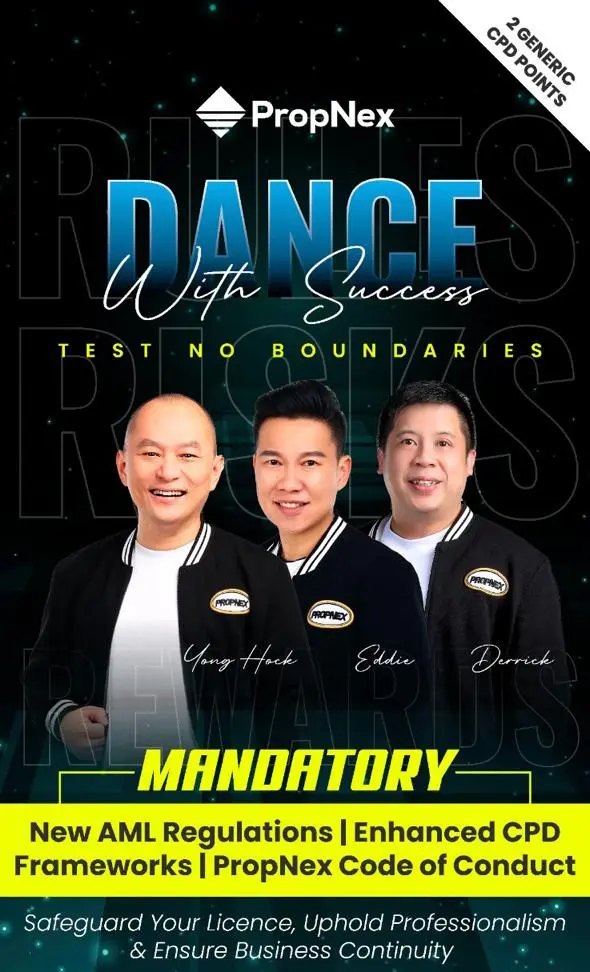
- Regular updates on CEA regulations, ethics standards, mandatory disclosure requirements, and changes to PDPA or anti-money laundering procedures
- Workshops on handling cooling measures (ABSD, LTV, MOP, SSD) and how they affect different client profiles
- Guidance on advertising rules (what you can and cannot say in listings, social media posts, or WhatsApp messages)
3.2) Sales and Practical Skills Training
- Prospecting techniques: how to generate leads through referrals, networking, cold calling, social media, and content marketing
- Pricing strategy: how to conduct Comparative Market Analysis (CMA), read market data, and advise clients on realistic pricing
- Negotiation skills: managing buyer and seller expectations, structuring offers, and closing deals without burning relationships
- Pitching and presentation: how to conduct effective property viewings, present yourself professionally, and differentiate yourself from other agents
- Technical skills: how to take videos to create listing or branding to increase engagements
3.3) Product Knowledge and Market Intelligence
- Deep dives into HDB policies (eligibility, grants, resale procedures)
- Private condominium due diligence (maintenance fees, sinking funds, masterplans)
- Landed property considerations (tenure, landed housing area plans, types)
- Commercial and industrial property basics
- New project launch briefings (location analysis, developer track record, pricing strategy)
4) Transaction Processing and Risk Managment
Property transactions involve significant legal and financial risk. A single documentation error can delay a deal, trigger a complaint, or even result in a lawsuit. Good agencies build internal processes to reduce these risks.
Here’s what proper transaction support looks like:
4.1) Standardized Internal Processes
- Clear workflows for handling Options to Purchase (OTPs), Tenancy Agreements, commission agreements, and completion documents. The agency provides step-by-step checklists so agents don’t miss critical steps like Option Exercise deadlines or mandatory disclosure requirements.
- Guidelines on conflicts of interest, dual representation (which is prohibited in Singapore), and what agents can or cannot handle in terms of transaction money. For example, agents cannot cash in HDB rental transactions, and must clearly disclose any potential conflict of interest when acting for a client.
4.2) Administrative and Compliance Oversight
- Many agencies have dedicated admin or compliance teams that spot-check transaction files, ensure mandatory forms are properly completed, and flag potential issues before they escalate.
- Recordkeeping for audits and dispute resolution. Agencies maintain centralized transaction records, which protect both the agent and the agency if a dispute arises months or years later.
4.3) Risk Mitigation
- Professional Indemnity Insurance (PII) coverage. Agencies are required to maintain PII that covers all registered salespersons. If a client sues for negligence, this insurance provides legal defense and financial protection (though serious misconduct may void coverage).
5) Commission Structure, Payouts and Costs
This is the part everyone asks about first, but it’s also the most misunderstood.
Here’s how it actually works:
5.1) Commission Split Between Agent and Agency (known as resale split)
- Agents earn a percentage of the total commission collected on a successful transaction, typically ranging from 60% to 90% depending on the agency, the agent’s seniority, and whether the lead came from the agency.
- Commission is earned only upon successful completion of a transaction. When the sale completes, the lease commences, or (for new launches) when the developer pays out commission.
- There is no base salary. If you don’t close deals, you earn zero. This is the single biggest mental shift for people coming from salaried employment.
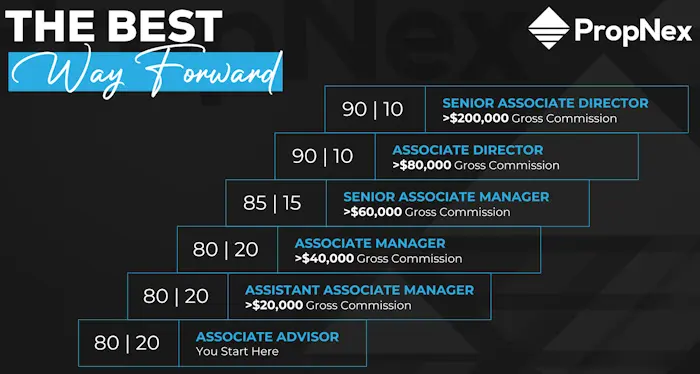
Example: If you sell a private condo for $1.5 million and the seller agrees to pay 2% commission ($30,000), and your agency split is 80/20, you earn $21,000 after deductions.
If you join PropNex as a brand new agent, your resale split starts at 80/20. Once your combined gross commission crosses $80,000, you will reach 90/10.
5.2) Commission Handling and Invoicing
- The agency receives commission payments from clients (or in some cases, directly from developers for new launches), then disburses the agent’s share according to the resale split.
- Tax invoicing is issued under the agency’s name, not yours. You’re not running an independent business entity—you’re operating under the agency’s license and GST registration.
- As a self-employed property agent, you’re responsible for your own CPF contributions (if you choose to contribute to CPF as a self-employed person) and income tax filing. The agency does not withhold taxes or contribute to your CPF.
5.3) Costs and Deductions Agencies charge agents for various operational costs, which are typically deducted from commission payouts. Such as,
- Annual CEA Licence fees
- Professional Indeminity Insurance
- Transaction processing fees (small admin charge per deal, PropNex doesn’t)
- Training fees (some payable, some free)
6) Dispute Handling, Complaints and Discipline
When something goes wrong in a transaction, whether it’s a client complaint, a documentation error, or an ethical breach—the agency is your first line of defense (or scrutiny).
Here’s how this works:
6.1) Consumer Complaint Handling
- If a client files a complaint against you with CEA, the agency is notified and conducts an internal investigation before (or alongside) CEA’s formal inquiry.
- Good agencies will mediate disputes early, helping resolve misunderstandings before they escalate to formal complaints. They may facilitate refunds, apologies, or corrective actions to protect both the client and the agent’s record.
- If CEA finds you liable, the agency may also face penalties (fines, license suspension) if they failed to supervise you properly. This shared liability incentivizes agencies to maintain strong compliance oversight.
6.2) Internal Discipline and Termination
- Agencies can impose internal discipline (warnings, suspension from transactions, or termination) when agents breach agency policies or CEA regulations—even if CEA hasn’t taken action yet.
- Serious breaches (e.g., misappropriating client deposits, forging signatures, dual representation) can result in immediate termination and a CEA investigation that may permanently bar you from the industry.
6.3) Reputation and Career Impact
- A complaint on your CEA record affects your career permanently. Even if you switch agencies, future employers can see your disciplinary history.
- Your agency’s reputation also affects you. If your agency is known for poor compliance or frequent consumer disputes, clients and co-broking agents may avoid working with you.
7) Culture, Networking and Career Platform
Beyond the operational framework, your agency provides the social and professional ecosystem that shapes your daily experience.
7.1) Team Environment and Co-Broking
- Property transactions often involve two agents (one representing the seller, one the buyer). Being in a large agency increases your access to co-broking opportunities—matching your buyers with other agents’ listings, or having other agents bring buyers to your listings.
- Internal collaboration and knowledge sharing. Successful agents in good agencies freely share market insights, referrals, and best practices. In toxic environments, agents hoard information and compete aggressively even within the same team.
7.2) Meetings, Briefings and Market Updates
- Regular seminars (or webinars) and project briefings keep agents informed about new launches, market trends, regulatory changes, and sales strategies.
- Developer preview sessions and site visits (especially for new launches) give agents firsthand knowledge to present confidently to clients.
7.3) Networking and Industry Relationships
- Your agency’s network includes bankers, lawyers, valuers, home loan specialists, and renovation contractors—relationships that help you provide comprehensive service to clients.
- Some agencies organize networking events, social activities, and recognition programs (awards, overseas incentive trips) that build camaraderie and motivation.
7.4) Career Growth Pathways
- As you gain experience, many agencies offer career progression: becoming a team leader, recruiting and mentoring new agents, or moving into training, compliance, or management roles within the agency.
- Some top agents eventually transition into property development, consultancy, or investment roles, using the industry knowledge and network they built as salespeople.
A real estate career in Singapore isn’t just about individual transactions—it’s about being part of an ecosystem where relationships, reputation, trust, and collaboration compound over time.
When evaluating agencies, don’t just compare the resale split.
Compare the total value of what you’re getting in exchange for the commission you’re sharing.
UNDERSTANDING YOUR INCOME: COMMISSIONS, COSTS & FINANCIAL REALITY
Money is one of the biggest concerns for anyone thinking of becoming a property agent in Singapore. People hear stories about eye-popping commissions, but they also hear about agents giving up after a year because they could not sustain themselves. The truth sits somewhere in between, and honest planning is needed before making the leap.
In this section, I will explain how commission structures work, what the first year may look like, and how income can grow later on for those who stay the course.
(a) How Commission Structure Works In Singapore
In Singapore, property agents earn through commissions, not salaries. What you earn depends entirely on the deals you close. For most deals:
- The seller typically pays a commission of 1% to 2%, though this can go up to 5% in rare cases, depending on property type and negotiation.
- The landlord or tenant typically pays a commission equal to one month’s rent for a 2-year lease.
Once the transaction is closed, the commission is paid to the agency, not directly to the individual agent. The agency then shares this commission with the agent according to the resale split.
A higher split for the agent usually means that person is taking on more of their own costs, while a lower split may come with stronger support or more company-generated leads.
A good example of this are boutique agencies that focus on serving tenants. They pass tenant leads directly to their agents in exchange for a lower resale split, trading take home pay for a steadier flow of leads.
There is also a timing issue that many people overlook. The work of marketing, viewings and negotiation can start months before any money appears in a bank account.
When does the money come in?
- Resale transactions: Commission is paid only after the sale is legally completed, which typically takes 3 months or more after the buyer exercises the Option To Purchase.
- New launch projects: Commission payouts from developers can take anywhere from 6 to 18 months.
- Rental transactions: Usually the fastest. Commission is paid upon signing the Tenancy Agreement. But the amounts are smaller.
Planning your cash flow around this time lag is essential, especially in your first year.
(b) Your First-Year Financial Reality
The first year is often the hardest. Many new agents take between 3 and 6 months to close their first deal. That means zero or very low income over that period. Even after the first commission comes in, earnings can remain uneven for some time.
It is common for new agents to end their first twelve months with total gross commissions of S$30,000 to S$40,000, and a fair number make less.
At the same time, there are real expenses to cover, such as:
- RES course and RES exam fees
- Licensing and registration costs
- Agency joining fees (if any)
- Marketing (photos, videos, ads, flyers)
- Transport to viewings and client meetings
- Mobile phone, tablet and data plans
- Property portal & tech tool subscriptions
All this is before setting aside money for personal living expenses and family needs.
Because of this, I usually suggest saving at least 6 to 12 months of personal expenses before going full-time. This buffer helps to remove panic and allows someone to focus on learning and building, rather than grabbing at any quick deal out of fear.
Can you be a part-time property agent?
Yes, you can. But it can be more challenging to get deals. If you are a seller, are you more inclined to engage a full-time or part-time agent to sell your house?
(c) When The Money Gets Better: Medium To Long-Term Income Potential
For those who persist beyond the first year, the income picture tends to improve (assuming their skillset has improved, too). By the second or third year, many agents who have been consistent with their prospecting and client care begin to see more regular deals.
They may start to receive referrals and repeat business from happy clients. At this stage, annual gross income for a solid mid-level agent commonly moves into the $60,000 to $120,000 range, although there is a wide spread.
From the fourth or fifth year onwards, if someone has built a strong client base, market knowledge and a clear focus, income can rise further and become more predictable. Consistent performers often earn between S$150,000 and S$300,000 annually. These are not guaranteed numbers, but they are realistic for agents who treat this as a serious business and keep improving.
At the very top end, there are agents who regularly close high-value deals or lead large teams. For them, six-figure monthly income is possible.
It is important to remember that such results sit in the top slice of the industry and usually come after many years of hard work. Even then, income may not always be smooth. There will still be quiet months and big months.
The key is to budget carefully, set aside funds during good periods, and remember that commissions are business revenue, not personal spending money.
YOUR FIRST 90 DAYS
Your first ninety days as a registered property agent can shape everything that follows. This period is less about quick income and more about building the right habits, systems and knowledge.
What follows is a practical plan based on my own experience and on watching many new agents. It assumes the registration has just been approved, and your day one as a licensed agent is about to begin.
Days 1 – 30: Building Your Foundation
The first month should focus heavily on proper setup. Key tasks include:
- Completing all agency onboarding steps, such as signing agreements, and learning how to use internal systems.
- Creating basic tools such as a professional email address, email signature, and simple but clean profiles on platforms like Facebook, Instagram or LinkedIn.
- Attending as many new-agent training sessions as possible.
At the same time, there should be a strong push to learn the market. Pick one or two key areas and study them closely. Look at current listings, recent transactions, and price trends.
Use whatever training materials the agency provides and attend every class that is relevant. Ask your upline if you can shadow them on viewings. Observing how an experienced agent handles questions is worth many hours of reading.
Another important task in this period is building a personal database. Start by making a list of everyone you know, including family, friends, former colleagues and neighbours.
The aim is not to pressure anyone into a deal. The aim is to let people know that you have entered Singapore’s real estate industry and that you are available if they or their contacts ever need a second opinion.
Days 31 to 60: Active Prospecting And Initial Client Engagement
The second month is when prospecting should become a daily routine. Set a clear target for the number of people to reach out to each day, whether by calls, messages or in-person contact.
These can be warm contacts from your own network or new leads from property portals (PropNex has the CHOPE system you can leverage on). The exact number depends on your schedule, but it should be challenging enough to push you out of your comfort zone.
This is also a good time to start building a simple but steady online presence. Share useful insights about the property market, not just sales posts. For example, you can:
- Explain how new cooling measures might affect certain profiles
- Break down recent transaction data in a clear way
- Share before-and-after stories (with permission) of clients
Regular sharing helps people see you as a source of information, even before they are ready to transact. Over time, this is what builds trust.
By now, you can expect to have your first serious conversations with potential clients. They may ask for help evaluating whether to sell an HDB flat, how much they can afford for an upgrade, or whether a certain new launch makes sense as an investment.
These early meetings are perfect chances to practise your needs analysis questions and presentation skills. Always follow up after each meeting with a clear summary and suggested next steps, even if the client is not ready to move yet.
Days 61 – 90: Pipeline Development And First Closings
In the third month, the focus shifts to managing a growing pipeline of prospects and converting them into active clients. If prospecting has been consistent, there should now be people at different stages of the process:
- Just starting to explore options
- Actively viewing homes
- Comparing offers or preparing to sign
Keeping track of everyone in a simple system is vital. This can be a CRM tool from your agency or even a well-organised spreadsheet at the start.
This period is also when many agents close their first deal. It might be a rental or a smaller sale. The size does not matter as much as the learning that comes from guiding a client from start to finish.
Lean on your mentor heavily here. Ask them to walk through each step before you meet the client and to review documents with you. Once the deal is done, ask your client for a testimonial and, if appropriate, for referrals.
By the end of ninety days, the mindset should be shifting from “I am trying out this new thing” to “I am running a business”. That means:
- Tracking key numbers such as calls made, appointments set, and deals closed
- Reviewing what prospecting methods are working best
- Adjusting your schedule to match client response patterns
These first three months will not define your whole real estate career in Singapore, but they can set patterns that either help or hold you back for years.
FREQUENTLY ASKED QUESTIONS ABOUT A REAL ESTATE CAREER IN SINGAPORE
1) Do you need to be naturally good at sales to succeed as a property agent?
Many people assume that only born salespeople can succeed in this line, but that is not my experience. What matters more is the willingness to learn, to listen, and to keep going even when things are slow.
A calm, data-driven approach often works better than a loud or pushy style. Clients care more about whether an agent can guide them safely than whether the person sounds like a classic salesperson.
2) Can you do real estate part-time while holding a full-time job?
Yes, some agents start part-time, especially if they have heavy financial commitments and cannot afford a sudden loss of salary. This approach reduces pressure and allows them to test whether a real estate career in Singapore suits them.
The trade-off is that progress is usually slower, and it can be tiring to juggle viewings after work and on weekends. Going full-time may help you focus better and push you to make things work.
3) How long does it usually take to earn a stable income in real estate?
For most people, the first three to six months are very quiet in terms of income and very busy in terms of learning. It often takes one to two years of consistent prospecting, client care and self-improvement before income becomes more stable.
By the third year, agents who have stayed focused often start to see regular referrals and repeat business. The exact timeline depends on effort, market conditions and how quickly someone learns from mistakes.
4) What is the best way to choose which agency to join after passing the RES exam?
The best agency is not always the one with the highest advertised commission split. It is wiser to look at mentoring support, division culture, training quality, technology tools and brand strength in the segments that matter.
Talking to existing agents in the agency and asking detailed questions about how new recruits are guided usually reveals a lot.
5) Is it possible for a foreigner to build a real estate career in Singapore?
Foreigners face extra checks from CEA and must usually have a real estate developer willing to hire them and support their application in advance. My short answer is: it will be a challenge getting yourself engaged by a developer. Real estate agencies in Singapore “do not employ real estate agents”. The real estate agents or property agents are associates of the agency, not employees.
6) Must I own a car in order to become a property agent?
Car ownership is optional. Though having a car makes it easier for you to move around. But there are many agents who use a mix of public transport, taxis and hourly-rated car rental to move around.
CONCLUSION
Switching into real estate is not a decision to be taken lightly. It means moving away from fixed pay towards a model where income depends heavily on effort, skill and timing.
At the same time, a real estate career in Singapore offers something many traditional jobs do not. It offers control of time, no hard cap on income, and the chance to guide people through some of the biggest financial choices of their lives.
Will AI eventually replace property agents?
It is a question worth taking seriously, especially in 2026 when AI tools are already reshaping how agents work. Automated valuation models can generate price estimates instantly. AI-powered chatbots handle initial enquiries around the clock. Listing descriptions, marketing copy and even property videos can now be drafted or produced with minimal human effort.
But here is what I have observed after more than a decade in this industry, and with a background in Computer Science: AI is very good at processing information, but property transactions are rarely just information problems.
A buyer torn between two very different homes is not looking for a data output. They are looking for someone who understands their family situation, their financial anxiety, and their long-term goals. A seller navigating a divorce settlement or estate sale needs empathy and discretion, not an algorithm.
The agents most at risk are those who add little value beyond what a search portal already provides. The agents who will thrive are those who position themselves as trusted advisors. People who interpret the market, manage difficult conversations, and guide clients through complex decisions that carry real financial and emotional weight. In that sense, AI is not a threat to a well-run real estate career. It is a productivity tool that frees up more time for the work that actually matters.
What’s next?
In this guide, I have walked through the basic CEA eligibility rules, the RES course and RES exam, the licensing path, the real financial picture, a ninety-day action plan, and alternative real estate careers outside frontline sales.
The goal has been to present a clear, honest view, not a sugar-coated recruitment pitch. With this information, someone can better judge whether the risks and rewards fit their current life stage, financial position and personality.
If, after reading, there is still serious interest in this path, the next step is simple. Check your eligibility carefully, plan your finances for at least a year, and start speaking with agents and agencies to understand their support and expectations.
I am always open to being a sounding board if you are considering this move. Regardless of what you eventually decide, I believe that clear information, thoughtful planning and a client-first mindset will always serve you well.
ONE LAST THING
I have spoken a lot about finding the right team and upline. Here is mine.
MY TEAM AT PROPNEX SINGAPORE
My associates come from varied backgrounds, including banking, video editing, sales, culinary and social services. Some are business owners.
Two of them have been with me for more than ten years. I feel very blessed to have crossed paths with everyone in the team.

Awards Celebration 
Lunch Gathering 
Lunch Gathering 
Awards Celebration

Dinner Gathering 
Lunch Gathering 
Dinner Gathering 
Breakfast Gathering
And I want to close with a story that has stayed with me.
A few years ago, I received a message that genuinely stopped me in my tracks. It was from a 12-year-old who had somehow found my content online and wanted to know how to get into real estate.


A 12-year-old asking about real estate is not something that happens every day.
But that is exactly what made it stick with me. Curiosity about this career comes from all directions and all ages. What matters is not when you start asking the question—it is what you do once you have a clear answer.
If you are at that point now, I hope this guide has given you the clarity you need.

Sometimes the smallest step
in the right direction
ends up being the biggest
step of your life.
Tip toe if you must,
but take the step.

WHAT BRINGS YOU HERE TODAY?
Are you wondering what to do in today’s market?
Perhaps you already have a clear mind of what you want to do?
In my blog, I often share stories of the challenges, triumphs, and lessons learned in my work as a real estate agent in Singapore.
Regardless of your situation, you can use me as a sounding board. I’ll provide perspective and clarity from my experience to help you make the most appropriate real estate decision in 2026.